



SSTR3
SSTR3 (somatostatin receptor 3) is a G protein-coupled receptor within the somatostatin receptor family that mediates the cellular actions of somatostatin and is functionally coupled to inhibition of adenylyl cyclase signaling[3][2]. Through regulation of intracellular signaling pathways, SSTR3 contributes to control of neurotransmission, endocrine activity, cell proliferation, and secretory processes, placing it at the intersection of neurobiology and endocrine regulation[3][2]. Mechanistically, activation of SSTR3 can interfere with mitogenic signaling pathways and promote cytostatic or cytotoxic responses, supporting its role in the regulation of cellular growth and survival[1][4]. In disease-related contexts, SSTR3 has been associated with nonfunctioning pituitary adenomas, where receptor activation has demonstrated antitumor effects in experimental models and has been proposed as a biomarker of biological relevance[4][2]. Compared with related somatostatin receptor isoforms, SSTR3 displays distinct pharmacological and regulatory properties, including rapid downregulation following prolonged agonist exposure and functional modulation through receptor heterodimerization, which can alter signaling outcomes[2][5]. This isoform-specific behavior has increased interest in selective ligand development and subtype-targeted research strategies[2][6]. For experimental applications, both SSTR3-selective agonists and antagonists have been developed, enabling investigation of receptor-specific signaling mechanisms, tumor biology, receptor trafficking, and therapeutic targeting in preclinical models[5][6][7].
References:
- [1]. Modena D, et al. Identification of a Novel SSTR3 Full Agonist for the Treatment of Nonfunctioning Pituitary Adenomas. Cancers (Basel). 2023 Jun 30;15(13):3453. [Content Brief]
- [2]. Guccione C, et al. Exploring key features of selectivity in somatostatin receptors through molecular dynamics simulations. Comput Struct Biotechnol J. 2024 Mar 18;23:1311-1319. [Content Brief]
- [3]. Yasuda K, et al. Cloning of a novel somatostatin receptor, SSTR3, coupled to adenylylcyclase. Mol Endocrinol. 1992;6(12):2136-2142. [Content Brief]
- [4]. Vázquez-Borrego MC, et al. A Somatostatin Receptor Subtype-3 (SST3) Peptide Agonist Shows Antitumor Effects in Experimental Models of Nonfunctioning Pituitary Tumors. Clin Cancer Res. 2020;26(4):957-969.
- [5]. Pfeiffer M, Koch T, Schroder H, Klutzny M, Kirscht S, Kreienkamp HJ, et al. Homo- and heterodimerization of somatostatin receptor subtypes. Inactivation of sst(3) receptor function by heterodimerization with sst(2A). J Biol Chem. 2001;276(17):14027-14036. [Content Brief]
- [6]. Rohrer SP, Birzin ET, Mosley RT, Berk SC, Hutchins SM, Shen DM, et al. Rapid identification of subtype-selective agonists of the somatostatin receptor through combinatorial chemistry. Science. 1998;282(5389):737-740. [Content Brief]
- [7]. Poitout L, Roubert P, Contour-Galcera MO, Moinet D, Gondran-Tellier B, et al. Identification of potent non-peptide somatostatin receptor subtype 3 antagonists. J Med Chem. 2001;44(18):2990-3000. [Content Brief]
-
SSTR3 Related Products (15)
Related Products (15)

- 1
-
Octreotide
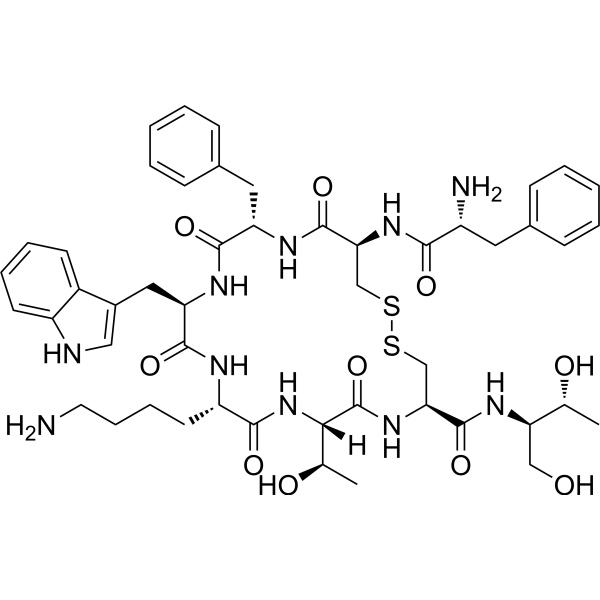 0 ImagesSynonyms: SMS 201-995Octreotide (SMS 201-995) is a somatostatin receptor agonist and synthetic octapeptide endogenous somatostatin analogue. Octreotide (SMS 201-995) can bind to the somatostatin receptor and mainly subtypes 2, 3, and 5, increases Gi activity, and reduces intracellular cAMP production. Octreotide (SMS 201-995) has antitumor activity, mediates apoptosis and may also be used in disease studies in acromegaly.
-
Cortistatin-14
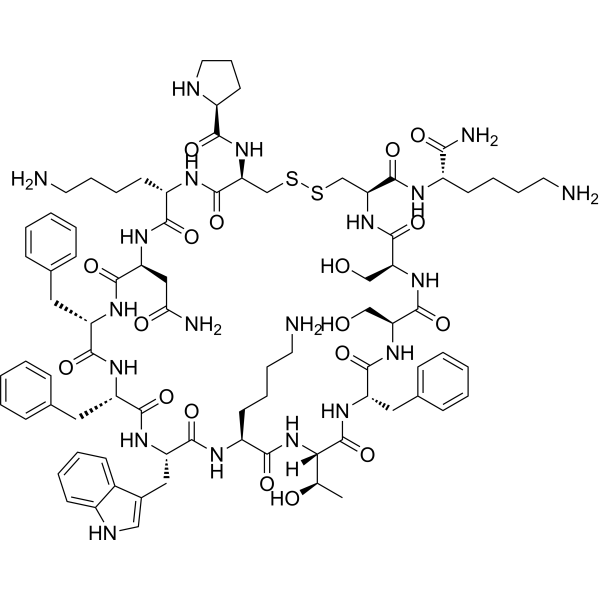 0 ImagesCortistatin-14 is a neuropeptide that shares structural similarities with somatostatin, working by binding to somatostatin receptors (sst1-sst5). Cortistatin-14 (TFA) has anticonvulsant, neuroprotective effects, and significant anti-inflammatory properties.
-
BIM-23056
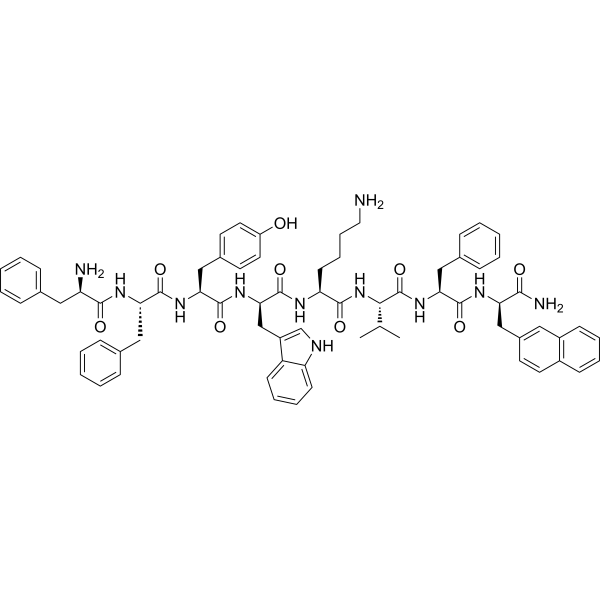 0 ImagesBIM 23056, a linear octapeptide, is a potent sst3 and sst5 somatostatin receptor antagonist with Ki values of 10.8, 5.7, respectively.
-
Veldoreotide TFA
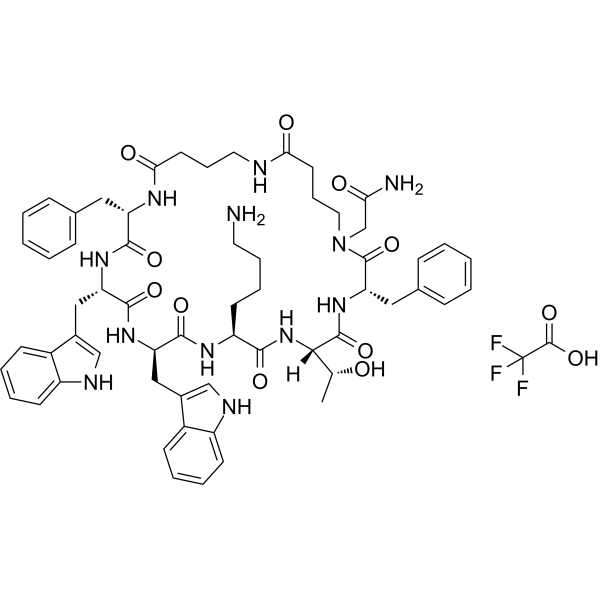 0 ImagesSynonyms: DG3173 TFA; PTR-3173 TFAVeldoreotide (DG3173) TFA a somatostatin analogue, binds to and activate the somatostatin receptors (SSTR) 2, 4, and 5. Veldoreotide TFA inhibits growth hormone (GH) secretion in adenomas compared with Octreotide (HY-P0036). Veldoreotide has the potential to be used as pain modulating agent
-
PRL 2915
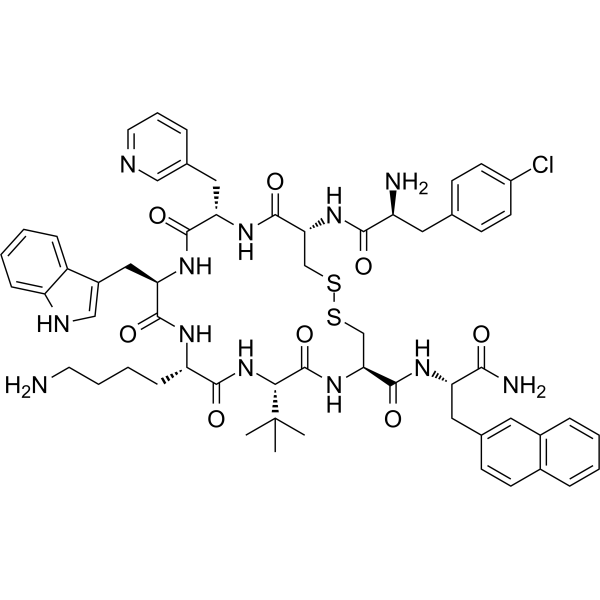 0 ImagesPRL 2915 is a potent human somatostatin subtype 2 receptor (hsst2) antagonist with a Ki of 12 nM.
-
Veldoreotide
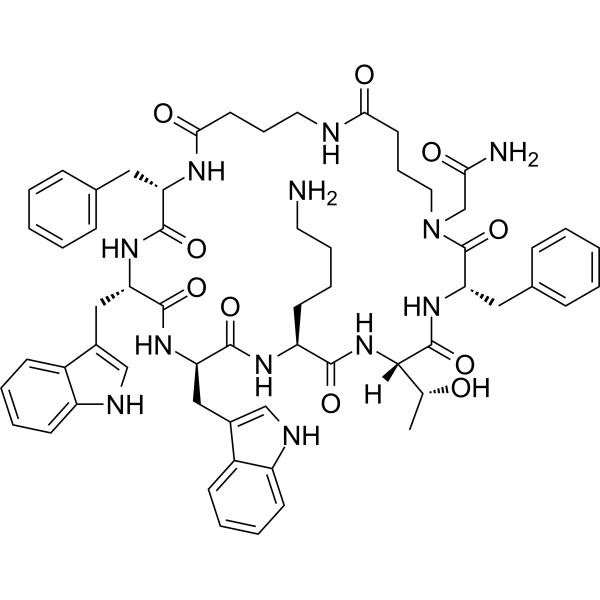 0 ImagesCat. No.: HY-P0024CAS No.: 252845-37-7Synonyms: DG3173; PTR-3173
-
Cortistatin-29 (reduced)
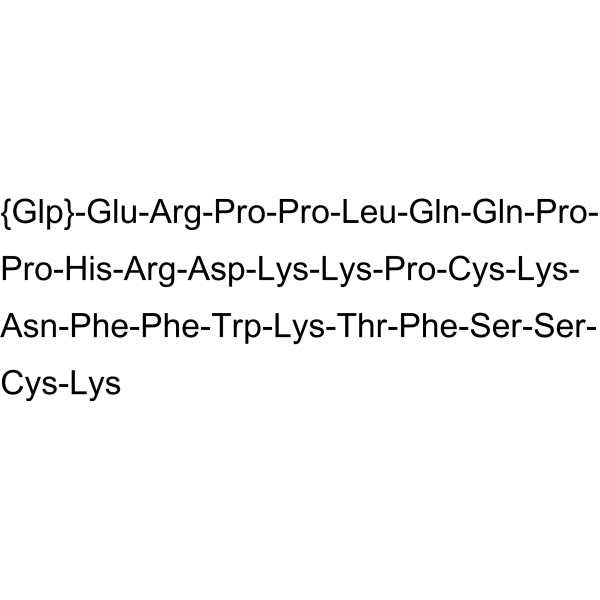 0 ImagesCat. No.: HY-P3618Purity: 98.12%Cortistatin-29 is a neuropeptide. Cortistatin-29 alleviates neuropathic pain. Cortistatin-29 binds all somatostatin (SS) receptor subtypes with high affinity and shows IC50 values of 2.8 nM, 7.1 nM, 0.2 nM, 3.0 nM, 13.7 nM for SSTR1, SSTR2, SSTR3, SSTR4, SSTR5, respectively. Cortistatin-29 shows anti-fibrotic effects.
-
PRL 3195
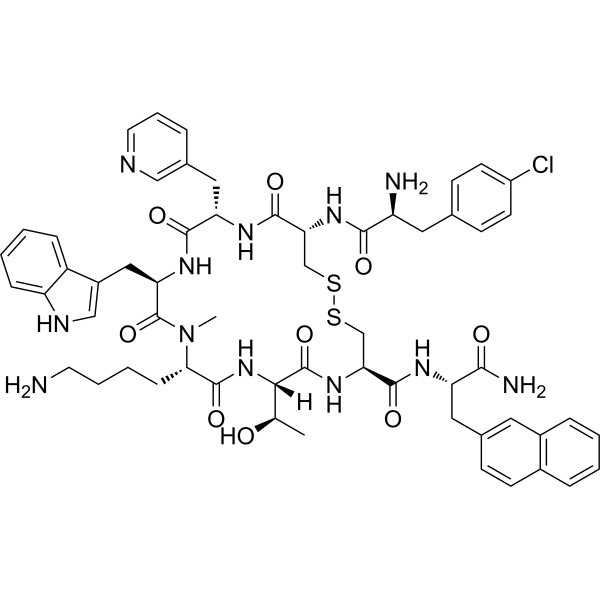 0 ImagesCat. No.: HY-P4469CAS No.: 341519-04-8PRL 3195 is a somatostatin receptor antagonist with Kis of 6, 17, 66, 1000 and 1000 nM for human somatostatin receptors (sst5, sst2, sst3, sst1 and sst4, respectively).
-
L-796778
 0 ImagesCat. No.: HY-123335CAS No.: 217480-25-6L-796778 is an agonist of the hsst3 receptor. In CHO-K1 cells expressing the hsst3 receptor, L-796778 is a partial agonist that inhibits forskolin (HY-15371)-stimulated cAMP production with an IC50 value of 18 nM.
-
SSTR3 Agonist-1
 0 ImagesCat. No.: HY-177493CAS No.: 3086695-73-7SSTR3 Agonist-1 (Compound EX 38) is an orally active SSTR3 agonist, with an EC50 of 0.14 nM. SSTR3 Agonist-1 reduces the kidney cystic index. SSTR3 Agonist-1 can be used in the research of autosomal dominant polycystic kidney disease.
-
BN-81674
 0 ImagesCat. No.: HY-123460CAS No.: 252278-73-2BN-81674 is a somatostatin analogue and a selective antagonist of the non-peptide human somatostatin sst3 receptor (Ki=0.92 nM). In addition, BN-81674 reversed the inhibition of cyclic AMP accumulation induced by 1 nM somatostatin through the sst3 receptor with an IC50 value of 0.84 nM. BN-81674 can be used in cancer research.
-
BIM-23056 TFA
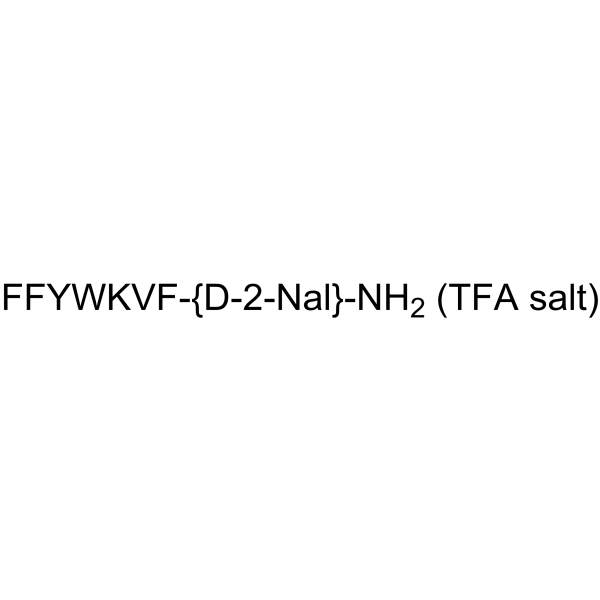 0 ImagesCat. No.: HY-P1203ACAS No.: 1426173-61-6BIM 23056 TFA, a linear octapeptide, is a potent sst3 and sst5 somatostatin receptor antagonist with Ki values of 10.8, 5.7, respectively.
-
Octreotide pamoate
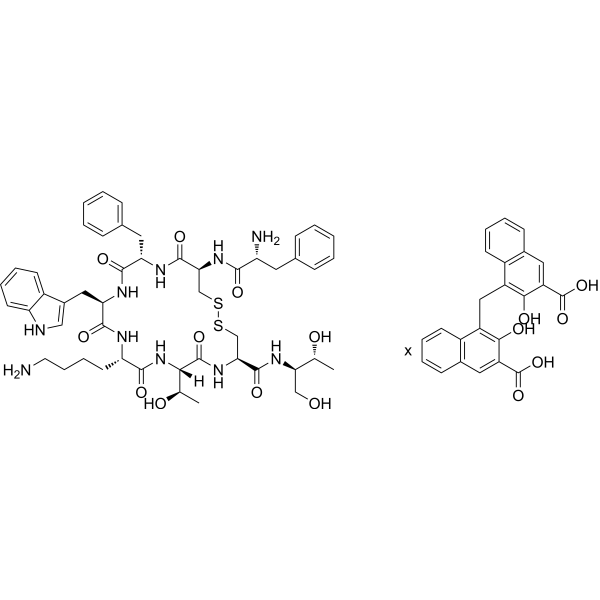 0 ImagesCat. No.: HY-P0036BCAS No.: 135467-16-2Synonyms: SMS 201-995 pamoateOctreotide (SMS 201-995) pamoate is a somatostatin receptor agonist and synthetic octapeptide endogenous somatostatin analogue. Octreotide pamoate can bind to the somatostatin receptors which are mainly subtypes 2, 3 and 5. Octreotide pamoate increases Gi activity and reduces intracellular cAMP production. Octreotide pamoate has antitumor activity, mediates apoptosis and may also be used in disease studies in acromegaly.
-
Cortistatin-29 (rat)
 0 ImagesCat. No.: HY-P2150CAS No.: 1815618-17-7Cortistatin-29 is a neuropeptide. Cortistatin-29 alleviates neuropathic pain. Cortistatin-29 binds all somatostatin (SS) receptor subtypes with high affinity and shows IC50 values of 2.8 nM, 7.1 nM, 0.2 nM, 3.0 nM, 13.7 nM for SSTR1, SSTR2, SSTR3, SSTR4, SSTR5, respectively. Cortistatin-29 shows anti-fibrotic effects.
-
SSTR3 agonist-1 TFA
 0 ImagesCat. No.: HY-177493ASSTR3 agonist-1 TFA is a potent, orally active, and selective SSTR3 agnoist (EC50 =0.14 nM). SSTR3 agonist-1 TFA binds to SSTR3 receptor to inhibit cAMP activity. SSTR3 agonist-1 TFA decreases kidney weight and kidney cystic index (KCI) in a mouse model of autosomal dominant polycystic kidney disease (ADPKD). SSTR3 agonist-1 TFA can be used for ADPKD research.
- 1



